

close
Choose Your Site
Global
Social Media
Views: 0 Author: Site Editor Publish Time: 2026-08-22 Origin: Site


Post-harvest yield preservation relies entirely on the integrity of your cold chain infrastructure. Subpar facilities lead to massive product loss, inflated energy bills, and severe compliance failures. You simply cannot afford to cut corners when protecting your harvested crop value.
Building agricultural cold storage is not standard commercial warehousing. It requires precise thermal engineering, rigorous airflow management, and highly specialized building materials. Living crops respire and generate heat, demanding dynamic cooling environments instead of static, passive ones.
We designed this guide to provide agricultural operators and facility managers an evidence-based framework for evaluating these complex construction projects. You will learn everything necessary to guarantee success, from calculating baseline cooling loads to vetting specialized design-build contractors. Following this framework ensures your next infrastructure investment yields a resilient, high-performing preservation facility.
Accurate Cooling Loads Dictate Design: Base your build on specific product respiration rates, daily ingress volumes, and target pull-down times, not just square footage.
The Thermal Envelope is Paramount: Long-term energy efficiency relies heavily on continuous vapor barriers and high R-value insulated metal panels (IMPs).
Solar ROI Requires Specific Baseline Conditions: Solar cold storage reduces operational expenditures (OPEX) but requires sufficient roof space, battery redundancy, and higher initial capital expenditure (CAPEX).
Contractor Expertise Matters: Shortlist only design-build partners with verifiable experience in specialized cold storage construction and food safety compliance.
Standard warehousing formulas fail miserably in the agricultural sector. Living crops behave differently than pallets of dry goods. They generate heat through cellular respiration even weeks after harvest. You cannot simply measure square footage and install an oversized commercial air conditioner. True agricultural capacity planning requires measuring dynamic, constantly shifting thermal burdens.
To design an effective facility, engineers must calculate the true cooling load accurately. This mathematical baseline dictates the size of your compressors, evaporators, and condensers. Miscalculating these metrics guarantees inefficient operation or spoiled crops.
Product Heat Load: Freshly harvested crops bring significant field heat into the facility. They also continuously respire. You must evaluate these specific field heat levels alongside the biological respiration rates of your exact crop types. Berries respire differently than root vegetables.
Transmission Load: Heat naturally leaks through your walls, floors, and roofs. Engineers calculate this inward thermal drive based on building insulation values and your local external climate extremes.
Internal Loads: Daily facility operations generate substantial heat. Moving forklifts, overhead LED lighting, processing equipment, and human operators all add to the internal thermal burden. Every watt of electrical energy used inside becomes heat.
Infiltration Load: Doors open and close frequently. Warm, moist outside air enters during daily loading dock operations. This inevitable air exchange creates a massive, sudden cooling demand requiring rapid mechanical response.
Once you define these baseline loads, you must establish clear success metrics for your facility. Defining acceptable temperature variance across different storage zones is critical. You must establish strict maximum pull-down times for bringing fresh produce down to optimal holding temperatures. Finally, tracking your target energy cost per ton of stored product serves as your most vital operational efficiency metric.
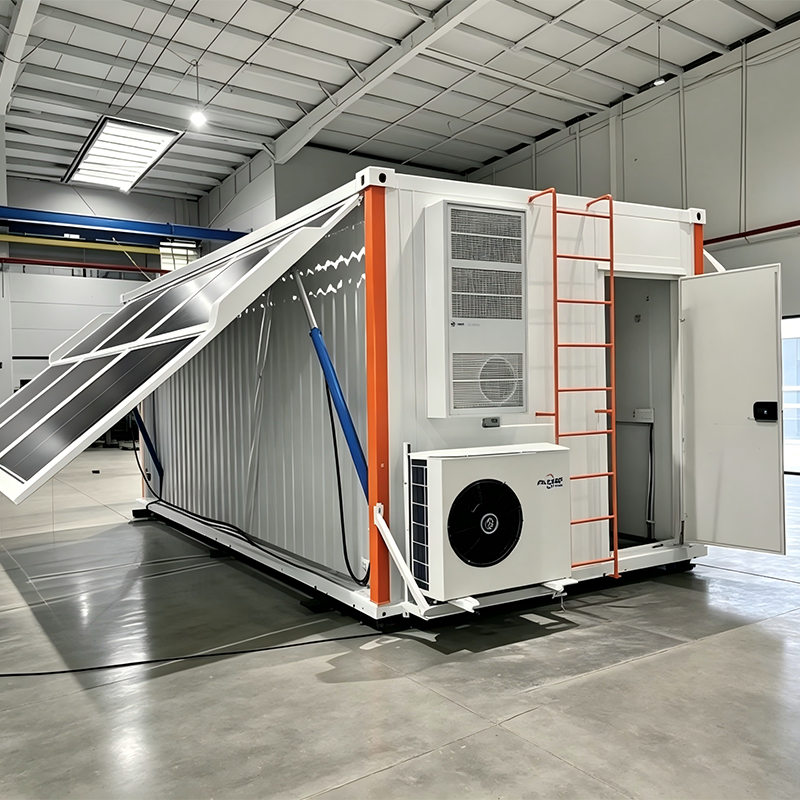
The physical barrier separating your highly controlled interior environment from the unpredictable outside climate forms the foundation of all successful Cold Storage construction. You must evaluate this structure based on uncompromising material quality and airtight structural integrity.
Insulated Metal Panels remain the undisputed industry standard for cold facility walls and ceilings. They offer superior, continuous thermal resistance and allow for rapid, clean installation. You must carefully evaluate panel R-values and overall core thickness based on your distinct target temperature zones.
Chilled environments need different engineering specifications than deep-frozen ones. Using overly thin panels forces your refrigeration plant to work continuously. Over-specifying thickness wastes upfront capital. A balanced, engineered approach prevents both extremes.
Storage Application | Target Temperature Range | Recommended IMP Thickness | Typical R-Value Range |
|---|---|---|---|
Cooler / Chill Room | 32°F to 45°F (0°C to 7°C) | 4 inches (100 mm) | R-28 to R-32 |
Standard Freezer | -10°F to 0°F (-23°C to -18°C) | 5 to 6 inches (125 - 150 mm) | R-35 to R-48 |
Blast Freezer | -40°F to -20°F (-40°C to -29°C) | 6 to 8 inches (150 - 200 mm) | R-48 to R-64 |
A flawless, continuous vapor retarder is absolutely mandatory. It must sit precisely on the warm side of your insulation. This placement stops vapor drive in its tracks. It prevents interstitial condensation from forming inside the panel cores. Without this barrier, moisture penetrates the walls, freezes into solid ice, and physically pushes the building apart from the inside out.
Floor insulation represents another critical, often overlooked risk area. Lacking proper sub-floor thermal breaks is a devastating structural mistake. In freezer applications, the extreme cold inevitably penetrates the concrete slab. You must install active glycol heating systems directly beneath the insulated floor layer.
Without these underfloor heating loops, the ground beneath your facility freezes solid over time. This creates permafrost. The expanding frozen soil eventually leads to aggressive structural floor heaving. Your concrete slabs crack, rack alignments shift, and the entire facility faces catastrophic failure.
You must evaluate mechanical cooling options against strict energy constraints and environmental regulations. Modern facility operators face a rapidly changing technological landscape. Selecting the right equipment dictates your long-term success.
The global refrigeration industry is actively phasing out high-GWP (Global Warming Potential) synthetic fluorocarbons. You now have two primary, future-proof alternatives for large-scale agricultural operations. Ammonia (NH3) systems remain highly efficient and historically reliable. However, they face heavy regulations due to their high toxicity. Ammonia requires specialized, highly trained operators.
Conversely, modern CO2 (R-744) transcritical systems offer excellent thermal performance alongside a much safer compliance profile. CO2 operates at much higher pressures than traditional systems, requiring specialized piping and engineering, but it completely eliminates toxicity risks and environmental phase-out concerns.
System Type | Efficiency Profile | Environmental Impact (GWP) | Primary Drawbacks |
|---|---|---|---|
Ammonia (NH3) | Exceptionally High | Zero (0) | Highly toxic, strict regulations, requires specialized operators. |
CO2 Transcritical | Very High (Climate Dependent) | One (1) | Operates at extreme pressures, requires robust specialized piping. |
Synthetics (HFCs) | Moderate to High | High (Phasing Out) | Regulatory phase-outs, future scarcity, environmental taxes. |
Integrating solar cold storage provides a highly compelling business case for agricultural operations. It acts as a powerful hedge against grid instability and rolling blackouts. It also directly mitigates aggressive peak-demand energy tariffs from utility companies during hot summer months.
However, you must assess the implementation realities carefully before committing capital. You need extremely accurate Photovoltaic (PV) array sizing to cover massive compressor start-up surges. You must install robust, large-scale battery storage to handle sustained overnight cooling loads when the sun goes down.
Additionally, consider the physical structural implications. Mounting heavy solar panels directly on IMP ceilings requires specialized structural engineering to prevent panel deflection and vapor barrier tears.
Avoid vendors promising absolute zero-grid reliance unless they provide comprehensive backup generator contingencies. Total off-grid operation remains highly risky without traditional mechanical redundancy. Extended stormy weather will eventually drain your batteries, putting your entire harvest at risk.
Interior architecture directly dictates operational efficiency. Exceptional cold storage design is not just about keeping a room cold. It involves moving chilled air effectively and managing complex logistical workflows.
You must design evaporator coil placement and air throw distances carefully. Proper plenum spaces above the racking prevent stagnant dead zones. Uneven cooling leads to rapid product desiccation, localized freezing, and catastrophic spoilage. Chilled air must circulate freely around every single pallet in the room. If you block the airflow, you lose the product.
Evaluating storage density requires scrutinizing your specific racking options. Drive-In, Push-Back, and Mobile Racking systems each offer unique logistical benefits. The main design trade-off involves balancing maximum pallet density against the necessary cubic footage required for unhindered cold air circulation.
Packing too many pallets into a constrained space physically strangles the airflow. The evaporators short-cycle. The air never reaches the center aisles. Consequently, you ruin the crops stored in the middle of your dense racking blocks.
Transit zones present massive thermal risks to your facility. You need dedicated refrigerated anterooms and high-speed roll-up doors. These features minimize thermal shock when moving sensitive crops from hot transport trucks into the main chilled facility.
Rapid door operation keeps warm, moist outside air exactly where it belongs. Proper dock seals prevent moisture ingress, dramatically reducing the defrost cycles required by your main evaporators.
Agricultural builds face unique points of physical and mechanical failure. Thermal bridging at ceiling joint connections destroys efficiency. Inadequate door sealing invites massive moisture loads. Under-sizing the refrigeration plant guarantees spoiled crops during peak summer harvests. You must mitigate these risks proactively through intelligent contractor selection.
A specialized "Design-Build" approach is generally much safer than the traditional "Design-Bid-Build" model for thermal facilities. Single-point accountability is absolutely crucial in cold construction. It prevents frustrating finger-pointing between independent architects, general contractors, and refrigeration engineers when moisture problems arise.
In a Design-Build model, one entity takes full, uncompromising responsibility for both the architectural thermal envelope and the mechanical performance. If the room fails to hold temperature, you only make one phone call.
Can they provide highly specific case studies of similarly sized agricultural facilities, rather than just dry commercial warehouses?
How do they handle complex local zoning, USDA/FDA food safety compliance, and stringent environmental permitting for modern refrigerants?
Do they execute mandatory thermal imaging audits immediately post-construction to definitively prove envelope integrity?
What specific protocols do they follow for vapor barrier sealing around complex pipe penetrations?
Effective preservation facilities demand precise alignment between your crop respiration data, thermal envelope design, and mechanical capacity.
Your thermal envelope serves as the ultimate safeguard against environmental intrusion and devastating energy waste.
Integrating renewable power through solar arrays requires meticulous battery sizing and structural planning to succeed.
You must prioritize single-point accountability by hiring specialized design-build contractors with verified agricultural experience.
Begin your project by commissioning a professional feasibility study and a comprehensive cooling load audit before soliciting any contractor bids or purchasing land.
A: Costs vary wildly based on temperature requirements, geographic location, and material selection. Basic chilled storage generally ranges between $150 and $200 per square foot. Deep-freeze facilities or specialized controlled atmosphere rooms often exceed $250 to $300 per square foot. Always request detailed quotes based on specific cooling loads rather than generic square footage estimates.
A: Reliable solar setups never rely solely on real-time sunshine. They operate as hybrid systems. During extended cloudy periods, facilities draw power from deep-cycle battery banks charged during peak sun hours. They also utilize grid-tie connections or rely on diesel generator contingencies. Mechanical redundancy ensures crop safety during prolonged adverse weather conditions.
A: Yes. The physics of vapor drive apply to any temperature differential. If your interior remains colder than the exterior environment, moisture will attempt to move inward. A continuous vapor barrier stops this moisture intrusion. Without it, condensation forms inside your walls, severely degrading the insulation and encouraging hazardous mold growth.


