

close
Choose Your Site
Global
Social Media
Views: 0 Author: Site Editor Publish Time: 2026-07-10 Origin: Site


Transitioning from small batch cooling to a dedicated storage facility marks a critical inflection point for your business. Small dairies and farm-gate shops often struggle during this rapid growth phase. Relying on outdated equipment puts your entire operation at risk. Standard commercial refrigerators simply cannot handle the high thermal load of bulk milk. They struggle to pull temperatures down quickly enough. This failure leads to slow cooling times and accelerated bacterial growth. Ultimately, it severely shortens the shelf life of your valuable dairy products.
You must move beyond temporary cooling fixes. Investing in compliant, reliable infrastructure is absolutely necessary. Evaluating the right system ensures compliance with strict local health regulations. Understanding the realities of the setup process determines both product safety and long-term viability. We will guide you through matching cooling capacities to your specific yield. You will also learn exactly how to navigate professional installation successfully.
Temperature Pull-Down is Critical: Milk requires rapid cooling to 34°F–38°F (1°C–3°C); cold room sizing must account for the specific thermal mass of liquid dairy, not just ambient air volume.
Application Dictates Setup: The choice between permanent built-in coolers and modular/smart mobile cold storage depends heavily on daily milk yield, site ownership, and sales channels.
Installation Quality Determines ROI: Professional cold room installation prevents chronic issues like panel condensation, thermal bridging, and compressor burnout.
Compliance is Non-Negotiable: Food industry cold storage standards mandate specific materials (e.g., food-grade stainless steel or coated panels, coved corners) to pass health inspections.
Holding pre-chilled goods requires minimal energy. Actively cooling warm fresh milk demands massive cooling power. Liquid dairy holds immense thermal mass. Standard commercial fridges fail this test routinely. They cannot pull temperatures down fast enough. This delay allows dangerous pathogens to multiply rapidly. Bacteria like Listeria and E. coli thrive in warm milk.
Regulators monitor these cooling times very closely. Local health departments enforce strict temperature logging protocols. In the US, the Pasteurized Milk Ordinance (PMO) sets rigid cooling standards. Other regions enforce similar dairy authority rules. Failing to meet these targets results in severe penalties. Inspectors will shut down non-compliant operations immediately.
Consider the financial impact carefully. Spoiled milk drains your profits directly. Failed health inspections ruin your brand reputation. Investing in a dedicated Fresh Milk Cold Room prevents these disasters. It costs far less than replacing lost batches continuously. Purpose-built cooling protects your revenue and keeps your customers safe.
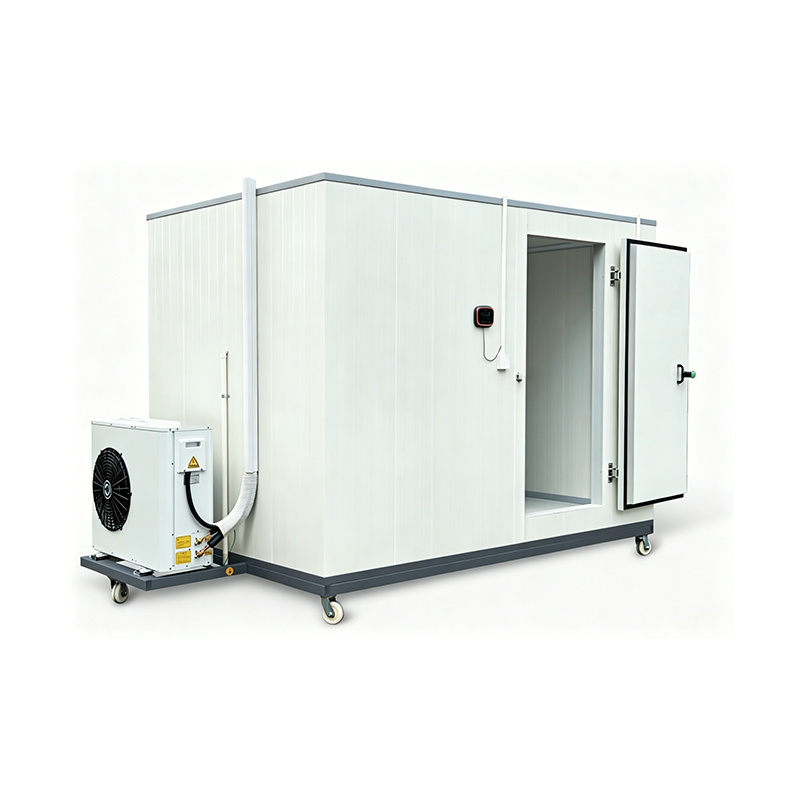
You must match your infrastructure to your daily yield. One size does not fit all. We see many farms overspend or underbuild.
Traditional walk-in cold rooms suit established setups best. They work perfectly for farms maintaining fixed facilities. High daily volumes demand this robust infrastructure. They offer excellent customizability. You can tailor them to exact dimensions. They easily meet stringent compliance standards. However, they require significant upfront capital. You also need permanent site modifications to accommodate them.
Leased spaces need flexibility. Agritourism setups and seasonal operations benefit greatly from mobility. Smart Mobile Cold Storage provides the perfect answer here. These units offer plug-and-play capability right out of the box. You can monitor temperatures remotely using IoT sensors. You can easily relocate them if your lease ends. Their main limitation involves standardized sizing.
Micro-farms often attempt DIY retrofits. Air conditioning overrides remain popular for tight budgets. We view these systems through a highly skeptical lens. They struggle significantly with rapid temperature recovery. They often raise immediate red flags during commercial health inspections.
System Type | Best Suited For | Primary Advantage | Major Limitation |
|---|---|---|---|
Traditional Walk-In | Established farms, high volume | Highly customizable, fully compliant | Requires permanent site modification |
Smart Mobile Storage | Leased spaces, seasonal yields | Plug-and-play, easy relocation | Limited to standardized dimensions |
DIY / Retrofit | Hobbyists, micro-farms | Low initial material cost | Poor temperature recovery, compliance risks |
Calculating cooling capacity requires exact precision. You measure this capacity in BTUs (British Thermal Units). Do not calculate required BTUs based on room square footage alone. You must base calculations on the volume of warm milk entering daily. Liquid dairy brings a massive heat load into the space. Your system must extract this heat rapidly.
Airflow matters just as much as raw cooling power. Evaporator placement dictates this airflow pattern completely. You need high-velocity air to cool the milk quickly. However, you must avoid freezing the top layer of the milk. Freezing separates the cream entirely. It destroys the milk's texture and ruins the batch. Proper evaporator positioning prevents these direct freezing drafts.
Meeting rigorous Food Industry Cold Storage compliance remains non-negotiable. Inspectors look for specific construction materials. They will check your setup against stringent hygiene standards.
Polyurethane (PU) Insulated Panels: These panels provide superior thermal resistance. They feature easy-to-clean coated surfaces.
Coved Flooring: You must install coved corners where the floor meets the wall. This prevents milk spills from accumulating and harboring bacteria.
Moisture-Resistant Shelving: Use heavy-duty, rust-proof shelving. It must safely hold heavy milk crates or metal churns without buckling.
Site preparation dictates the final result. A perfectly level floor represents your most critical pre-installation step. Uneven floors cause severe panel misalignment. Proper drainage prevents water pooling during daily washdowns.
Panel assembly requires meticulous attention to detail. Installers must create perfect vapor barriers between every seam. Improper panel joining causes thermal bridging. This defect allows heat to bypass the insulation. It leads to severe ice build-up inside the room. It also forces your compressor to work overtime constantly.
Refrigeration unit commissioning brings the system to life. Technicians connect the condensing unit outside to the evaporator inside. Proper line sizing ensures optimal refrigerant flow. Only certified HVAC/R technicians should handle refrigerant charging. Utilizing professional Cold Room Installation prevents early component failure.
Testing and calibration finalize the setup process. You must run the system empty for a full 24 hours. This period allows technicians to calibrate digital thermostats accurately. They also test the defrost cycles thoroughly. Never load valuable dairy before completing this vital trial run.
Avoid common setup pitfalls to protect your investment. Undersized compressors cause frequent short-cycling. The system turns on and off constantly to maintain temperature. This stresses the motor and leads to early burnout. Poor door seals invite high humidity into the space. This trapped moisture inevitably causes dangerous mold growth.
Evaluating installers requires a strict vetting process. You need partners who understand dairy operations specifically. Ask targeted questions before signing any contracts. Ensure they grasp the physics of liquid cooling.
Verify their direct experience with food industry regulations.
Test their knowledge of dairy-specific cooling loads and BTU calculations.
Confirm their availability for 24/7 emergency service and repairs.
Ask for references from other local farms or dairy shops.
A fresh milk cold room is a purpose-built environment. It is never just a large refrigerator. Treating it as standard storage will compromise your product and your compliance status. You must prioritize rapid temperature pull-down and stringent hygiene standards.
Audit your daily milk volume carefully in gallons or liters. Measure your available physical footprint exactly. Request site-specific quotes from certified professionals. Never rely on generic online calculators to determine your required cooling capacity. Taking these deliberate steps ensures your dairy operation remains safe, compliant, and highly profitable.
A: You must maintain the room strictly between 34°F and 38°F (1°C–3°C). This tight range prevents bacterial growth effectively while avoiding partial freezing. Freezing ruins the milk's texture by causing cream separation.
A: We strongly advise against this. Cross-contamination presents a major risk. They also require different environments. Aging cheese generally requires warmer temperatures (50°F–55°F) and much higher humidity than fresh milk storage.
A: A standard modular walk-in usually takes 1 to 3 days to install. This timeline assumes you have already completed necessary site preparation, including leveling the flooring and running the required electrical lines.
A: Yes, it is highly recommended. Power outages pose a massive financial risk. A cold room's passive thermal retention typically lasts only 4 to 6 hours. A generator protects your valuable inventory during extended grid failures.


