

close
Choose Your Site
Global
Social Media
Views: 0 Author: Site Editor Publish Time: 2026-08-12 Origin: Site


The stakes in Cold Storage construction are incredibly high. Compromised insulation leads to compounding energy waste, severe condensation issues, and catastrophic product loss. Facility owners cannot afford to cut corners on thermal envelopes. We must move beyond basic R-values to ensure lasting success. This article provides a skeptical, engineering-focused framework for your next project. We help you evaluate panel materials, assess joint integrity, and plan for long-term operational stability. You will learn how to match insulation properties to your specific operational requirements. We establish trustworthiness by explicitly stating a hard truth. There is no universal "best" panel on the market today. You only find the right alignment of material properties. These must strictly match your facility operating temperatures and regulatory compliance demands. Read on to master the exact selection criteria needed for a resilient, high-performing facility.
Panel core material (PIR, PUR, or EPS) dictates both fire compliance and thickness requirements.
Long-term ROI depends more on joint design and vapor barrier continuity than baseline R-values.
cold storage design must account for specific temperature zones (ambient, cooler, freezer) to avoid over-engineering or under-insulating.
Installation mechanics (e.g., cam-locks vs. slip joints) drastically impact labor costs and structural integrity, especially in modular or mobile cold storage applications.
Selecting the right core material forms the foundation of any successful project. We evaluate three primary foam cores used across the industry. Each material presents unique chemical properties, realistic limitations, and distinct operational outcomes. You must base your decision on verifiable performance data rather than marketing claims.
Polyurethane (PUR) remains a standard industry choice for many applications. It delivers a high initial R-value and provides excellent structural rigidity for large building spans. Installers find it relatively easy to handle. However, you must carefully note its potential for long-term thermal drift. As blowing agents slowly escape the foam cells over a decade, the effective insulation value steadily decreases. You must account for this aged thermal resistance during your planning phase.
Polyisocyanurate (PIR) represents the premium standard in modern insulation. It features highly superior fire resistance. The unique chemical structure causes PIR to char rather than melt during an active fire event. This creates a protective barrier against further flame spread. PIR also maintains higher thermal stability over its lifespan compared to standard PUR. Facilities facing strict insurance mandates rely heavily on PIR panels to meet aggressive safety codes.
Expanded Polystyrene (EPS) serves as the budget-conscious option. It relies on trapped ambient air for insulation. Because of its lower density, you require significantly thicker panels to match PUR or PIR thermal performance. We acknowledge its validity for non-critical, low-budget chillers. However, we strongly warn against its use in deep-freeze environments. The required thickness creates massive footprint tradeoffs. You lose valuable internal storage space just to meet baseline insulation targets.
Insulation Core Material Comparison
Material Core | Fire Resistance | Thermal Stability | Ideal Use Case |
|---|---|---|---|
Polyurethane (PUR) | Moderate (Can melt under high heat) | Good (Subject to thermal drift) | Standard warehousing, moderate temperatures |
Polyisocyanurate (PIR) | High (Chars, resists melting) | Excellent (Retains R-value longer) | Strict compliance zones, high-value storage |
Expanded Polystyrene (EPS) | Low (Requires separate thermal barriers) | Stable (Air-filled cells) | Budget chillers, non-critical spaces |
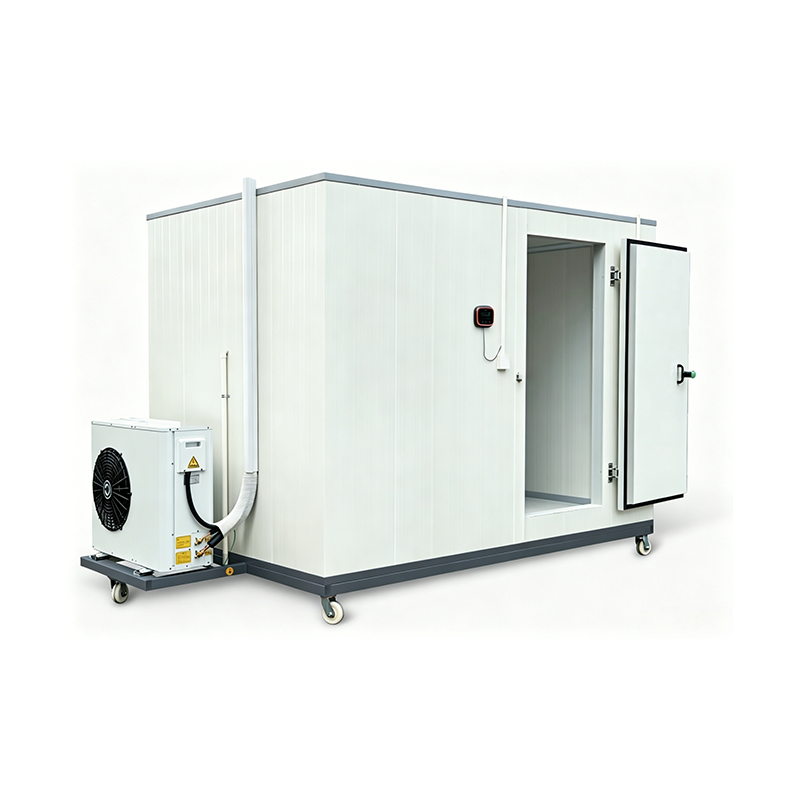
Target operating temperatures dictate your required panel thickness. Professional designers rely on strict empirical data for these calculations. You must calculate the delta-T. This represents the absolute temperature difference between the exterior ambient heat and your interior target environment. Higher delta-T values demand thicker insulation profiles to prevent heat transfer.
We see common mistakes when buyers guess their required thickness. Guesswork leads to catastrophic condensation or bloated capital expenditures. You must follow evidence-oriented sizing logic to maintain facility efficiency.
Industry standards provide reliable baselines for standard applications. You should use these guidelines as your starting point before running specific thermal models:
Processing rooms and Coolers (35°F to 45°F): Require 3-inch to 4-inch panels. This prevents surface condensation while keeping upfront material volumes low.
Freezers (-10°F to 0°F): Demand 5-inch to 6-inch panels. This thickness handles extreme internal cold without allowing exterior surface sweating.
Blast Freezers (-40°F to -20°F): Necessitate robust 6-inch to 8-inch profiles. These extreme environments require maximum thermal resistance to handle rapid temperature drops.
You must carefully consider the law of diminishing returns here. Over-insulating beyond your specific delta-T requirement wastes valuable capital resources. It fails to yield proportional energy savings over time. Specifying a 6-inch panel for a basic 40°F produce cooler creates unnecessary structural weight. You gain absolutely negligible thermal benefits. Smart engineers focus on precise thermal alignment rather than blind maximization.
Thermal failures rarely happen in the center of an unbroken panel. They almost always happen at the seams. Compromised joints destroy even the most expensive insulation materials. You must prioritize joint integrity and vapor barrier continuity above base material metrics. Implementation realities often look very different from controlled laboratory tests.
Your choice of connection type dictates the long-term structural health of your facility. Installers use two primary joint systems across the industry.
Tongue and Groove (T&G): These connections offer a cost-effective and straightforward approach. They fit together quickly during large-scale construction. However, they require meticulous application of high-quality sealants. Installers must apply continuous beads of butyl tape or silicone within the joint. Any gap allows moisture ingress, compromising the entire wall system.
Cam-Lock Systems: These utilize hidden internal hooks and pins. A simple wrench turn pulls the panels tightly together. This mechanical action is crucial for establishing perfect, lasting seals. It enables dramatically faster cold room installation schedules. It also allows for full modularity. You can disassemble and relocate these units easily. This proves absolutely essential for temporary setups. Road vibrations aggressively test joint integrity in transportable units. Cam-locks hold these seams firmly together under constant mechanical stress.
We must strongly warn you about the severe risk of interstitial condensation. Vapor barriers stop moisture flow into the insulation. If this barrier breaks at the joint, warm humid air enters the seam. It hits the cold inner surface and reaches its dew point. Condensation forms immediately and eventually freezes. Expanding ice physically pushes the metal facings away from the foam core. This catastrophic failure is known as panel delamination. Once delamination occurs, you must replace the entire panel.
Your panel choice must satisfy rigorous regulatory frameworks. Authoritative procurement criteria focus heavily on safety and sanitation. You cannot operate legally without meeting these strict external demands.
Fire safety drives modern commercial construction decisions. Insurance underwriters heavily scrutinize thermal envelopes before issuing policies. You should specifically look for FM Global approvals. The FM 4880 standard acts as a critical benchmark for fire performance. ASTM E84 ratings also provide necessary data on flame spread and smoke development. We frame this compliance not just as a basic safety necessity. It acts as a highly powerful lever during contract negotiations. Superior fire ratings often secure significantly lower commercial insurance premiums.
Hygiene protocols dominate food and pharmaceutical storage projects. Daily washdown requirements dictate your choice of panel facings. Standard galvanized steel degrades rapidly under harsh chemical cleaning agents. You must evaluate alternative, durable finishes carefully. Plastisol-coated steel offers excellent chemical resistance for daily sanitization. Stainless steel provides the ultimate durable, hygienic surface for high-impact zones. Fiberglass Reinforced Plastic (FRP) works exceptionally well in high-moisture processing environments.
You must also note strict USDA and FDA guidelines. These agencies mandate specific surface profiles for food safety. Walls must remain completely smooth and entirely non-porous. They must resist aggressive sanitation procedures without pitting or rusting. Deeply ribbed panels trap dangerous bacteria and routinely fail compliance audits. Flat or lightly striated profiles ensure rapid, thorough cleaning cycles.
You must shift your focus toward long-term technical viability. The procurement process requires a methodical, evidence-based approach. We recommend establishing a strict bottom-of-funnel decision framework. This ensures you select materials based on verified engineering data rather than aggressive sales pitches.
Proper cold storage construction hinges on disciplined material validation. We suggest implementing the following next-step actions before signing any contracts:
Request Technical Data Sheets (TDS): Demand comprehensive documents from every potential manufacturer. Scrutinize the long-term thermal resistance (LTTR) values. Do not accept initial, unaged R-values as permanent performance metrics.
Verify FM Approvals Directly: Demand concrete proof of all safety certifications. Verify specific FM approvals directly through the official FM Approvals database. Misleading claims exist in the marketplace, so independent verification is mandatory.
Run Thermal Bridging Simulations: Engage your mechanical engineer early in the design phase. Ask them to run dynamic thermal bridging simulations. These software models reveal hidden thermal weak points around doors, structural columns, and floor joints.
Finalize Joint Mechanisms: Evaluate the proposed joint mechanics against your operational reality. A static, dry warehouse accepts T&G joints readily. A high-vibration environment demands mechanical cam-locks. Match the joint to the environmental stress.
This rigorous shortlisting logic eliminates substandard products before formal bidding begins. It protects your facility from premature structural degradation.
Choosing the right insulated panel requires a careful balance of thermal demand, structural constraints, and regulatory compliance. You cannot rely on basic material assumptions when building critical infrastructure. Success demands a rigorous evaluation of core materials, joint integrity, and surface finishes.
We strongly encourage buyers to engage with panel manufacturers early in the design phase. Proactive collaboration allows you to run accurate thermal bridging simulations and finalize technical specifications before breaking ground. Take the following actionable steps to secure your facility:
Select PIR cores when strict fire compliance and long-term thermal stability are non-negotiable.
Match panel thickness precisely to your calculated delta-T to avoid wasteful over-engineering.
Prioritize cam-lock joints for any modular environments to guarantee unbroken vapor barriers.
Specify smooth, chemical-resistant panel facings to ensure seamless USDA and FDA hygiene compliance.
Always verify safety certifications independently before finalizing your procurement orders.
A: R-value measures a material's resistance to heat flow at the center of the panel. Higher R-values indicate better insulation. U-value represents the total thermal transmittance of the entire panel system. It includes joints, fasteners, and potential thermal bridges. Relying solely on R-value is a common mistake. You must evaluate the U-value to understand true real-world performance.
A: No. Standard metal panels completely lack the necessary continuous vapor barriers and thermal breaks. Using them in refrigerated environments guarantees rapid moisture infiltration. This leads directly to interstitial condensation, severe internal ice buildup, and structural delamination. You must always specify purpose-built insulated panels to prevent these catastrophic failures.
A: It depends entirely on your specific application. Cam-lock panels provide superior performance for smaller footprints. They are the ideal choice for temporary setups or highly modular units. Continuous line panels offer better efficiency for massive warehouse footprints. They minimize seams across long expanses, making large-scale installations more structurally sound.
A: Purpose-built panels typically last between 20 and 30 years. Their actual lifespan depends heavily on rigorous vapor barrier maintenance. You must regularly inspect joints and reseal any compromised seams. Preventing mechanical damage from forklifts is also crucial. Proper daily facility management directly extends the structural integrity of your insulation system.


