

close
Choose Your Site
Global
Social Media
Views: 0 Author: Site Editor Publish Time: 2026-08-17 Origin: Site


Thermodynamics dictate a harsh reality for temperature-controlled facilities today. They run constantly, fighting extreme indoor and outdoor temperature differences around the clock. This relentless demand makes them massive energy consumers compared to typical commercial buildings. Facility owners often hesitate at the high upfront capital expenditures required for premium materials. However, sacrificing these early investments skyrockets long-term operational costs. It also leaves profit margins highly vulnerable to volatile energy markets. Building an efficient facility requires a proactive approach from day one.
We designed this evidence-based roadmap to help you navigate critical structural, mechanical, and technological choices. You will learn how to evaluate these crucial investments during the earliest planning phases. Following these guidelines ensures your operation remains resilient, profitable, and structurally sound for decades.
Energy management begins in the architectural phase; retroactive fixes are financially inefficient.
The thermal envelope (paneling and industrial doors) is the primary defense against energy loss.
Modern HVACR automation can reduce refrigeration energy consumption through predictive defrosting and variable speed compressors.
Solar integration requires structural pre-planning for roof load and thermal bridging.
Selecting the right contractor requires evaluating their track record in thermodynamic compliance and post-build performance guarantees.
Facility owners face a critical financial crossroad during the initial planning phase. Standard building practices often fail when applied to temperature-controlled environments. Planners who cut corners on insulation or refrigeration systems invite severe financial risks. Thermal leaks force compressors to run continuously. This overwork leads to premature equipment burnout. Furthermore, unstable internal temperatures compromise sensitive inventory, causing expensive product spoilage.
You must shift your financial perspective toward operational expenditure (OpEx). Energy-efficient materials carry a higher initial price tag. However, they drastically reduce monthly utility bills. This reduction protects your profit margins against unpredictable global energy markets. A successful cold storage design meets specific, measurable criteria. It delivers a lower cost-per-pallet position over time. It shrinks your facility's carbon footprint. It also ensures seamless compliance with tightening environmental regulations.
To achieve these outcomes, you need a system-level evaluation framework. You cannot treat insulation, refrigeration, and lighting as isolated line items. They operate as interconnected variables. Heat generated by inefficient lighting forces the refrigeration system to work harder. Poor insulation renders premium compressors useless. Evaluating these systems together reveals the true operational cost of your facility.
Chart 1: CapEx vs. OpEx Scenarios in Temperature-Controlled Facilities
Construction Strategy | Upfront CapEx | Long-Term OpEx | Primary Business Risk |
|---|---|---|---|
Standard Commercial Build | Low | Extremely High | Equipment burnout, high energy bills, inventory loss |
System-Level Optimized Build | Medium to High | Consistently Low | Higher initial funding requirements |
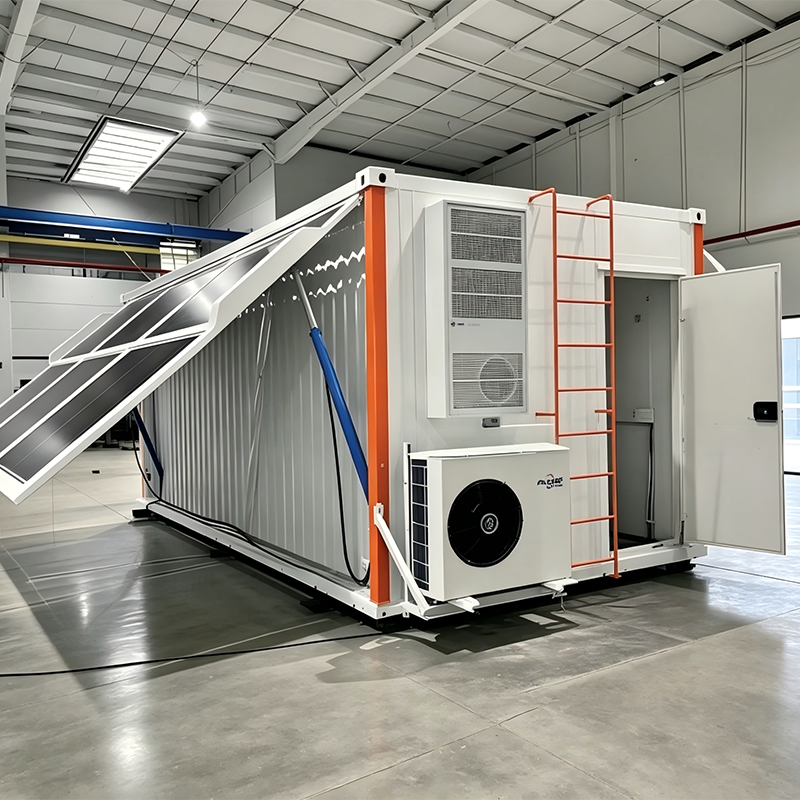
The thermal envelope acts as your primary defense against energy waste. Cold Storage construction relies heavily on robust paneling and intelligent door management. Insulated Metal Panels (IMPs) dominate the modern industry. Planners must evaluate the strict tradeoff between panel thickness, R-value, and usable square footage. Thicker panels provide higher thermal resistance. However, they consume valuable internal space. You must balance thermal goals against your required pallet capacity.
You must also address the hidden risk of thermal bridging. Thermal bridging occurs when conductive materials bypass the insulation layer. Metal fasteners, poorly sealed joints, and uninsulated corners pull outside heat into the cold room. Roof-to-wall transitions represent major vulnerability zones. Contractors must detail these joints precisely to prevent continuous energy drains.
Industrial doors present another major vulnerability. Standard warehouse doors drain energy every time they open. Ambient air floods into the cold space, forcing evaporators to run constantly. You should establish strict criteria for shortlisting doors during any cold storage construction project. Look for high-speed, roll-up insulated doors combined with fully sealed dock shelters.
Consider these essential door features and their direct outcomes:
Fast opening speeds (up to 100 inches per second): Minimizes the exposure time between temperature zones.
Tight perimeter seals: Blocks warm air infiltration when the door remains closed.
Automated activation sensors: Prevents human error, ensuring doors never stay open unnecessarily.
Fast cycle times mean drastically less ambient air infiltration. This single feature directly reduces the daily load on your evaporators, yielding immediate utility savings.
Refrigeration consumes the largest share of power in any temperature-controlled facility. Selecting the right cold room solutions requires evaluating both efficiency and regulatory compliance. You must choose carefully between natural refrigerants and synthetic alternatives. Natural refrigerants like Ammonia (NH3) and Carbon Dioxide (CO2) offer superior thermodynamic efficiency. They also boast zero ozone depletion potential. Regulatory bodies worldwide continue phasing out synthetic HFCs. Ignoring these upcoming environmental compliance phases now will force expensive, disruptive retrofits later.
Compressor technology also dictates your daily power consumption. Traditional compressors operate on inefficient on/off cycles. They run at 100% capacity until the room reaches the target temperature, then shut off completely. This binary operation creates massive power surges. Variable Frequency Drives (VFDs) solve this problem. VFDs adapt motor speeds to match partial load conditions. If the room only requires 40% cooling capacity, the compressor runs at 40%. This precise adaptation significantly lowers peak energy draw and reduces mechanical wear.
Automated defrost cycles represent another major technological leap. Evaporator coils naturally build up frost over time, which impedes heat transfer. Historically, facilities relied on timed defrosting. Timed systems blast heat onto the coils at predetermined intervals, regardless of actual frost levels. This introduces unnecessary heat into the cold space. Modern facilities evaluate the shift toward demand-based defrosting instead. Demand-based systems use optical or temperature sensors to detect actual frost buildup. They only trigger the defrost cycle when absolutely necessary, mitigating severe energy waste.
Table 1: Defrost Cycle Efficiency Comparison
Defrost Type | Trigger Mechanism | Energy Waste Level | Impact on Cold Space |
|---|---|---|---|
Timed Defrost | Pre-set time intervals | High | Introduces unnecessary heat |
Demand-Based Defrost | Frost detection sensors | Low | Only heats when necessary |
Renewable energy integration offers massive potential for temperature-controlled logistics. A distinct synergy exists between solar generation and refrigeration demands. Peak solar energy generation happens during hot summer afternoons. This timing aligns perfectly with your facility's peak cooling demand. By capturing this energy onsite, you offset your heaviest utility draws when grid power costs the most.
However, successful solar cold storage requires intensive pre-planning. You cannot simply bolt solar panels onto a finished cold warehouse. You must engineer the roof structure for the added dead load of solar arrays long before pouring the foundation. Solar panels, racking systems, and ballasts add immense weight. Standard roof designs will fail under this stress.
You must also mitigate severe vapor barrier risks. Roof penetrations required for solar mounts threaten the integrity of your thermal envelope. Even microscopic punctures in the vapor barrier allow moisture to enter the insulation. This moisture freezes, expands, and destroys the panel from the inside. Engineers must specify non-penetrating mounting systems or meticulously sealed attachment points.
Your financial evaluation dictates the viability of these systems. Solar arrays represent a significant upfront investment. You must aggressively factor in local tax credits, federal incentives, and utility net-metering programs. These financial mechanisms drastically shorten the ROI timeline. When calculated correctly, solar offsets secure long-term profitability against rising grid costs.
The success of your energy-optimized build relies entirely on your construction partners. You must differentiate carefully between general contractors and specialized experts. Standard general contractors lack the thermodynamic expertise required for sub-zero builds. They often overlook critical vapor barrier details or install standard commercial equipment in extreme environments. You need partners who live and breathe temperature-controlled logistics.
Use a strict shortlisting logic to filter your candidates. Ask precise, technical questions during the bidding phase. Consider using this numbered evaluation list:
"Can you provide verifiable energy models from past facilities?" Do not accept vague promises. Demand hard data showing their past projects meet projected energy usage targets.
"How do you test the vapor barrier integrity prior to commissioning?" Look for contractors who utilize blower door tests or thermal imaging before finalizing the build.
"What is your strategy for mitigating thermal bridging at structural joints?" Their answer will reveal their true understanding of envelope dynamics.
Risk mitigation must remain your top priority during procurement. Emphasize the absolute necessity of post-build performance guarantees. Structure your contracts to include rigorous commissioning phases. You must test all refrigeration and envelope systems under full operational load before handing over final payment. Furthermore, negotiate extended warranties on all crucial HVACR components to protect your upfront investments.
Reducing energy costs remains fundamentally a design and procurement challenge, not merely an operational fix.
Invest heavily in your thermal envelope early; thicker panels and high-speed doors stop energy waste at the source.
Adopt intelligent HVACR automation, prioritizing variable frequency drives and demand-based defrosting over outdated legacy systems.
Plan structural requirements for solar panels before finalizing blueprints to capture massive long-term utility savings.
Audit your current blueprints or initiate a feasibility study with specialized engineering firms before you finalize construction budgets.
A: Energy-optimized facilities generally require a 10% to 20% higher upfront capital expenditure compared to standard builds. You spend this premium on thicker insulation, specialized doors, and automated refrigeration controls. However, these investments drastically reduce monthly utility bills, typically delivering a full return on investment within a three to five-year operational payback period.
A: Air infiltration at loading docks stands as the primary culprit. Standard doors let massive volumes of warm air inside during loading cycles. Poorly sealed panel joints and uninsulated structural corners also create severe thermal bridging. These vulnerabilities force compressors to run continuously, reinforcing the need to invest heavily in the thermal envelope during initial construction.
A: Yes, but only when correctly integrated. Smart sensors provide raw data, which means nothing on its own. IoT devices only reduce energy bills when you tie them to automated control systems. Connecting sensors to variable frequency drives and demand-based defrost systems turns raw data into automated mechanical action, yielding substantial utility savings.


