

close
Choose Your Site
Global
Social Media
Views: 0 Author: Site Editor Publish Time: 2026-07-15 Origin: Site


Improper meat storage poses a massive operational risk for modern food suppliers. Accelerated spoilage and sudden cross-contamination can quickly devastate your brand reputation. Failed compliance audits frequently lead to catastrophic inventory loss and heavy regulatory fines. Many facility managers underestimate the structural demands of these heavy-duty environments. Transitioning from standard commercial freezers to a dedicated facility demands careful planning and precise execution.
You must balance the initial capital expenditure against long-term energy efficiency. Meeting strict regulatory compliance standards adds another layer of complexity to this structural upgrade. This article provides a transparent, evidence-based framework for tackling these exact challenges. You will learn how to accurately evaluate and size your ideal storage infrastructure. We will also show you how to execute this critical upgrade seamlessly. By following these steps, you can secure your supply chain without disrupting daily operations.
Temperature & Compliance: Meat preservation requires strict adherence to baseline temperatures (e.g., USDA/FSIS standard of 0°F / -18°C or lower) and specialized airflow dynamics to prevent freezer burn.
Material Selection: Stainless steel cold storage panels are non-negotiable for high-moisture, heavy-washdown meat processing environments due to their corrosion resistance.
Implementation Reality: Successful cold room installation depends heavily on site prep, specifically floor insulation and electrical load capacity, which often cause project delays if ignored.
Total Cost of Ownership (TCO): Sizing calculations must factor in not just current inventory volume, but required airflow gaps and peak-season influxes to prevent compressor overexertion.
Evaluating a Meat Freezing Room requires understanding what sets it apart from general commercial refrigeration. Meat storage demands highly precise thermal dynamics. You must differentiate between simply holding frozen meat and rapid blast freezing. Holding meat safely requires a stable internal temperature of 0°F (-18°C). Blast freezing demands specialized, high-velocity equipment. This equipment drops core temperatures rapidly to minimize ice crystal formation. Smaller ice crystals protect the cellular structure of the meat. They also prevent moisture loss upon thawing.
Hygiene and cross-contamination prevention form the next critical criteria. Your facility must maintain strict physical separation between different meat types. Raw poultry and beef cannot share the same direct airflow or drainage paths. You must also manage blood and moisture runoff effectively. Floor drains require specific traps to prevent bacterial backup into the room. A seamless interior finish prevents blood from pooling in hidden crevices.
Regulatory baselines strictly govern these environments. Agencies like the FDA and USDA enforce rigid compliance mandates. Local health departments also conduct frequent operational audits. They dictate specific shelving heights to keep products safely off the floor. They require shatterproof lighting fixtures to prevent accidental glass contamination. They also mandate automated temperature monitoring redundancies. These logging systems ensure continuous food safety during unexpected power fluctuations.
Selecting the right infrastructure depends heavily on your business scale. It also relies on your specific operational workflow. We generally categorize Meat Cold Storage into distinct architectural approaches. Each approach solves different logistical challenges for food suppliers.
First, consider walk-in freezers versus industrial warehouse cold rooms. Walk-in freezers work best for busy restaurants and mid-sized regional distributors. They feature modular panel designs. This modularity allows for much faster deployment and easier relocation. Industrial built-in rooms cater to slaughterhouses or large-scale wholesale suppliers. These massive setups support heavy forklift access. Forklifts require reinforced ramps and high-speed roll-up doors to maintain thermal boundaries during loading.
Next, evaluate pre-fabricated versus custom-built solutions. Pre-fabricated rooms offer highly predictable costs and standardized warranties. However, they come with limited spatial configuration options. Custom-built solutions demand a higher upfront cost. They offset this premium by optimizing unusual floor plans perfectly. They also allow for specific workflow integrations. You can connect a processing room directly to the freezer using custom conveyor hatches.
Use door-opening frequency to guide your final evaluation. High-traffic environments let massive amounts of warm air inside daily. Your refrigeration unit must have an excellent recovery time to handle this thermal stress. A slow recovery time leads to dangerous temperature spikes. These spikes put your entire inventory at severe risk of accelerated bacterial growth.
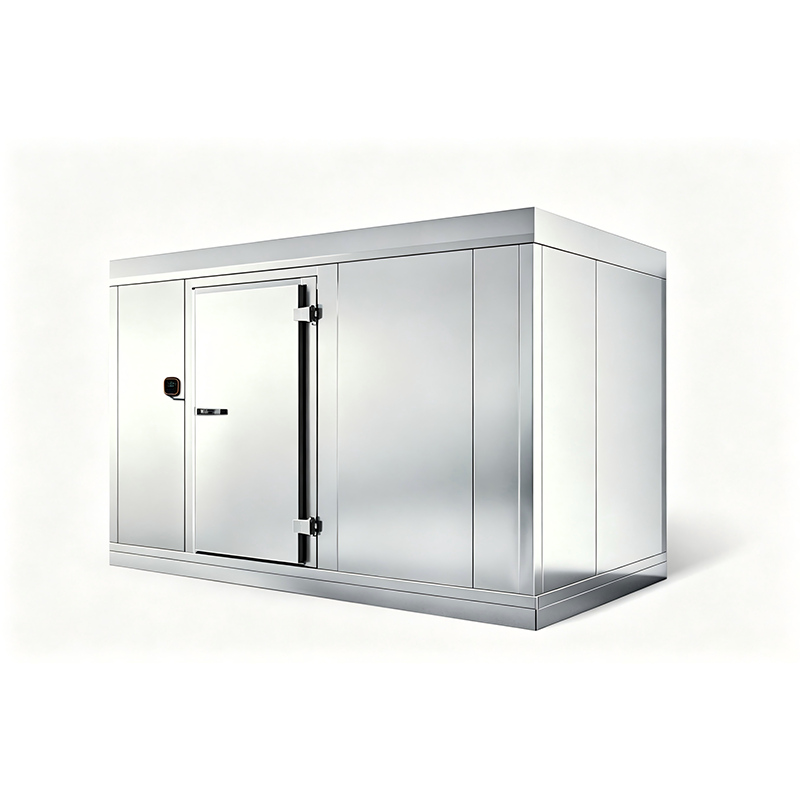
Long-term longevity and hygiene depend on matching specific features to strict outcomes. Proper material selection prevents massive maintenance headaches later. It also ensures you pass rigorous health inspections consistently.
The industry overwhelmingly prefers Stainless Steel Cold Storage for meat applications. This material remains completely impervious to harsh chemical sanitizers. Meat processing plants use highly caustic foaming agents to dissolve animal fats. Standard metals corrode quickly under these aggressive cleaning protocols. Stainless steel features a non-porous surface. This smooth finish effectively prevents bacterial harboring. It also provides exceptional impact resistance against swinging meat hooks and heavy utility carts.
Insulation thickness directly controls your thermal stability. We measure this efficiency through the R-Value rating. Sub-zero meat storage typically requires high-density polyurethane (PU) or polyisocyanurate (PIR) panels. You should mandate a minimum panel thickness of four to six inches for deep-freeze environments. Thinner panels force your compressor to run constantly, drastically shortening its lifespan.
Flooring and thermal breaks require immediate engineering attention. You must install insulated, reinforced flooring to handle heavy pallet jacks safely. A proper thermal break prevents sub-floor frost heave. Frost heave occurs when the ground underneath freezes, expands, and cracks the concrete foundation. A cracked foundation compromises the entire structural integrity of the room.
Material Type | Hygiene & Washdown Rating | Impact Resistance | Corrosion Resistance |
|---|---|---|---|
304 Stainless Steel | Excellent | Very High | Excellent |
Galvanized Steel | Moderate | High | Moderate |
Standard Aluminum | Good | Low | Poor (Under Caustic Wash) |
Preventing over-purchasing or under-capacity requires a strict sizing methodology. Many buyers make critical errors when calculating their spatial requirements. Proper sizing protects your equipment and ensures consistent product quality.
When sizing your Food Industry Cold Storage, never calculate based solely on square footage. You must factor in cubic volume and actual usable space. Multiply your length, width, and height accurately. Then, subtract the volume occupied by shelving racks and structural pillars. A proven rule of thumb requires leaving 30% to 40% of the interior volume entirely empty. This void allows for adequate air circulation. Leave at least six inches of space between the walls and the meat pallets. Densely packed meat blocks airflow and will not stay consistently frozen.
Future-proofing ensures your investment scales effectively over time. Always factor in projected business growth over a five-year horizon. Buying a slightly larger unit today costs much less than replacing an undersized unit in three years. Plan your pallet lane expansions early.
Energy load assumptions strictly dictate your equipment needs. You must evaluate the ambient temperature directly outside the room. A freezer placed inside a hot commercial kitchen works much harder than one situated in a climate-controlled warehouse. Engineers refer to this external stress as the ambient heat load. This heat drastically impacts the required compressor horsepower. You must also account for the thermal load of the meat itself entering the room.
The rollout process often reveals significant implementation realities. A flawless cold room installation requires careful coordination to avoid operational downtime. Rushing the assembly phase always leads to severe mechanical failures later.
Every project must begin with a comprehensive pre-installation site audit. Engineers must assess the existing structural integrity of your facility. They will verify three-phase electrical availability. Single-phase systems usually cannot handle industrial freezing loads. They must confirm your grid can handle the aggressive startup surge. They also evaluate proper drainage requirements for daily defrost cycles.
We recommend a strict installation phasing sequence to minimize daily disruptions:
Floor Preparation: Lay high-density extrusion board under the concrete. You cannot simply build on bare warehouse floors.
Panel Assembly: Engage cam-locks meticulously. Install heavy-duty vapor barriers to block moisture infiltration.
System Mounting: Mount the refrigeration units securely. Execute professional pipe braising to connect the condenser and evaporator.
System Calibration: Perform aggressive pull-down testing. Use thermal imaging cameras to detect hidden microscopic leaks in the panel joints.
Buyers must actively mitigate common adoption risks. Inadequate vapor barriers quickly lead to rapid ice buildup inside the panels. Undersized evaporators inevitably result in short-cycling and premature equipment failure. Finally, vendor timeline delays frequently occur due to supply chain issues. Specialized compressors often require long lead times. Plan your installation schedule with plenty of buffer time.
Selecting the right contractor ensures long-term operational stability. You need a clear framework to evaluate equipment providers objectively. Do not base your decision solely on the lowest initial bid.
Always ask specific, operational questions during the bidding process. First, ask them about their emergency response protocols. Inquire if they stock replacement compressors locally. Shipping heavy parts across the country can halt your operations for weeks. Next, inquire about compliance features. Ask if they provide automated temperature logging systems that remain fully compliant with strict FSIS reporting standards.
Evaluate warranties and Service Level Agreements (SLAs) carefully. You must distinguish between panel warranties and mechanical warranties. Insulated panels often carry structural warranties exceeding ten years. However, moving parts and compressor warranties typically only cover one to three years. Clarify exactly what constitutes a voided warranty regarding maintenance schedules.
Take immediate actionable steps before requesting customized quotes. Conduct a thorough inventory audit to confirm your exact volume requirements. Secure a detailed architectural blueprint of your facility. Check your current electrical panel capacity. These documents give contractors the exact data they need to provide accurate, reliable proposals.
Setting up a dedicated meat freezing room represents a major infrastructure investment. It is not a simple appliance purchase. You are building a highly controlled environment designed to protect your most valuable assets. Prioritizing proper sizing ensures your equipment operates at peak efficiency year-round. Choosing robust materials like stainless steel guarantees maximum hygiene and structural durability. Relying on professional installation prevents costly operational failures down the road. These strategic decisions ultimately yield long-term energy savings and result in zero product loss. Protect your inventory and secure your supply chain today. We strongly recommend requesting a comprehensive site audit or capacity consultation with a certified cold storage engineer.
A: Costs vary wildly based on spatial volume and material choices. A smaller walk-in setup might cost around $10,000 to $15,000. Large industrial facilities easily exceed $100,000. Custom stainless steel setups run higher initially but last significantly longer in harsh washdown environments. Always request customized quotes based on cubic volume.
A: The standard timeline depends heavily on scale and customization. Fabrication and equipment procurement usually take two to four weeks. The physical on-site installation generally requires three to seven days. Complex industrial systems or sites needing extensive floor preparation may extend this timeline slightly.
A: The primary difference lies in the holding temperatures and the intended storage duration. Meat coolers typically run between 32°F and 40°F. We use coolers for temporary holding and processing fresh meat. Meat freezers operate at 0°F or below. We use freezers for long-term storage to halt bacterial growth entirely.
A: Upgrading a standard room for blast freezing presents significant technical limitations. Blast freezing drops core temperatures rapidly. This process requires dedicated, higher-velocity evaporators. It also demands vastly larger compressors than standard holding rooms. Most standard insulation panels cannot handle the extreme thermal stress without upgrading the entire envelope.


