

close
Choose Your Site
Global
Social Media
Views: 0 Author: Site Editor Publish Time: 2026-07-01 Origin: Site


Commercial seafood processing operates under immense daily pressure. Harvesters race against time before inevitable spoilage begins. Any freezing delay causes immediate protein degradation in the catch. Fish flesh loses its firm texture rapidly during this window. Generic commercial freezers fail completely in these demanding applications. Standard equipment cannot pass the critical ice crystal formation zone quickly. Slow freezing creates massive ice crystals inside the tissue. These sharp crystals rupture delicate cellular walls abruptly. Defrosted fish then loses vital moisture and market value simultaneously. This guide delivers a precise technical evaluation framework. Plant managers and commercial buyers need this exact operational data. You can objectively assess equipment vendors using these criteria. We will show you how to verify system capacities accurately. Our goal involves mitigating your expensive facility deployment risks. You will learn exactly what specifications matter most.
A dedicated Seafood Blast Freezer must reach core temperatures of -18°C within hours to preserve cellular integrity, requiring significantly higher cooling capacities than standard storage.
Selecting the right insulation, flooring, and paneling during cold room installation prevents thermal bridging and structural failure under heavy operational loads.
Anti-corrosion materials (like SS316 stainless steel) are non-negotiable for seafood applications due to the high-salinity environment.
Vendor evaluation should prioritize customized thermal load calculations over off-the-shelf unit recommendations.
Processing facilities often misunderstand industrial freezing equipment categories completely. You must clearly distinguish between pulling down temperatures and holding inventory. A Seafood Blast Freezer executes aggressive, rapid temperature drops. It forces ambient or chilled seafood down to -35°C quickly. This rapid thermal plunge preserves tissue quality perfectly. Rapid freezing keeps internal ice crystals microscopically small. Small crystals protect the delicate cell membranes from rupturing. Conversely, traditional holding rooms serve an entirely different purpose. Standard Seafood Cold Storage simply maintains a stable environment. These holding units operate between -18°C and -25°C. They preserve already frozen inventory safely over long periods. They lack the immense cooling capacity required for rapid freezing.
Many buyers attempt to save upfront capital expenses unwisely. They ask vendors for a single dual-purpose room. You should avoid this critical engineering mistake entirely. Mixing hot incoming fish alongside frozen inventory causes severe problems. Fresh fish releases immense thermal heat into the enclosed room. Moisture migrates rapidly from the fresh catch into the air. This heat causes dangerous ambient temperature fluctuations constantly. Your existing frozen inventory suffers immediate freezer burn. Surface moisture evaporates, destroying the product weight and visual appeal. Compressors run continuously trying to stabilize the chaotic environment. Overworked refrigeration systems eventually suffer catastrophic mechanical failure.
Evaluating your daily workflow dictates the entire structural layout. Batch processing utilizes sturdy trolley and rack storage systems. Workers load racks manually and push them inside the freezer. Batch freezing suits operations handling varied seasonal catches efficiently. Continuous processing requires automated conveyor or spiral belt systems. Fish move steadily through the freezing tunnel without stopping. Spiral freezers demand complex engineering and massive floor space. They serve high-volume monoculture processing facilities best. We recommend aligning your equipment choice directly against daily tonnage expectations.
Vendors must provide transparent, customized mathematical calculations upfront. You need precise BTU or kW requirements verified independently. Heat load depends heavily on your specific incoming product temperature. Target core temperature and turnaround time dictate necessary horsepower. Consider freezing 500kg of fresh salmon efficiently. The fish enters the room at exactly +5°C. You need a -18°C core temperature in exactly four hours. This specific scenario requires massive instantaneous heat removal. Standard commercial algorithms fail to account for seafood fat content. Ask your vendor to detail their exact thermodynamic assumptions.
Follow this systematic process when evaluating proposed thermal calculations:
Verify the exact specific heat capacity used for your fish species.
Calculate the latent heat of freezing for the total batch weight.
Assess the internal heat generated by evaporator fan motors.
Measure the expected thermal infiltration during door openings.
Cold air alone cannot freeze fish quickly enough. Air velocity dictates the actual freezing speed fundamentally. You need high-velocity fans pushing directed airflow horizontally. Uneven air distribution ruins entire product batches routinely. Dead zones create dangerous thermal hot spots in rack centers. Fish located inside these hot spots freeze too slowly. Large ice crystals destroy the meat texture locally. Proper evaporator design forces air evenly across every single tray.
Industrial refrigeration demands robust, heavy-duty compressor technologies. Deep-freeze efficiency requires two-stage or cascade refrigeration systems. Single-stage compressors struggle to reach -40°C efficiently. We evaluate semi-hermetic compressors against industrial screw compressors below. Semi-hermetic units offer excellent value for medium-scale operations. Screw compressors dominate massive industrial processing plants globally. They handle brutal continuous thermal loads reliably. Your maintenance budget often dictates this final selection.
Compressor Type | Best Operational Scale | Maintenance Frequency | Vibration Levels |
|---|---|---|---|
Semi-Hermetic Reciprocating | Medium Batch Processing | Moderate to High | Moderate |
Industrial Screw | Large Continuous Processing | Low (High Durability) | Low |
Two-Stage Cascade | Ultra-Low Temp Deep Freeze | High (Complex Piping) | Moderate |
Environmental regulations evolve rapidly worldwide regarding industrial refrigerants. You must check local GWP limits strictly before purchasing. Future-proof refrigerants protect your massive capital investment permanently. Ammonia remains the gold standard for sheer industrial efficiency. However, ammonia requires strict safety protocols and specialized training. Carbon dioxide systems offer excellent low-temperature performance safely. Low-GWP synthetic blends provide practical alternatives for smaller localized facilities.
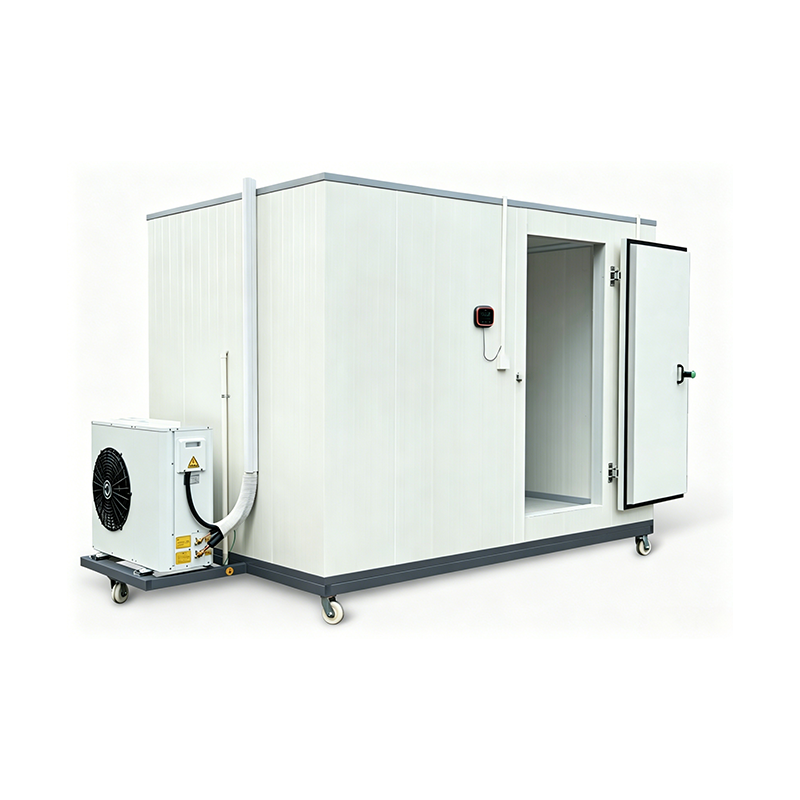
Insulation panel selection determines long-term operational success heavily. Proper Cold room installation demands uncompromising vapor barriers everywhere. Moisture infiltration destroys internal panel insulation quickly. Standard chillers use 100mm panels safely for holding products. Deep freeze operations require 150mm to 200mm minimum thickness. Polyurethane or polyisocyanurate cores provide optimal thermal resistance. These thick panels prevent external condensation and costly thermal leaks. Even smaller facilities relying on Seafood Cold Storage solutions face these exact insulation demands.
Sub-floor freezing destroys concrete foundations entirely over time. The extreme cold penetrates downward into the soil underneath. Soil moisture freezes, expands, and causes violent frost heave. This hydraulic heaving fractures the concrete slab above it completely. You must install high-density floor insulation blocks underneath reinforced concrete. Incorporate sub-floor heater mats to prevent soil freezing permanently. Forklifts and heavy trolleys exert massive dynamic point loads daily. Structural engineers must calculate this exact load bearing precisely.
Defrost cycles generate significant water volumes inside the room. Improper drainage creates severe operational hazards immediately. Planners must design pitched floor surfaces carefully during construction. Install heated drain lines directly below the evaporator units. Heated lines prevent defrost water from freezing solid midway. Blocked drains cause water pools across the facility floor. These pools freeze into dangerous slip hazards for workers.
Project managers face strict timeline dependencies during facility construction. Managing specialized contractor schedules requires intense daily oversight. The correct deployment sequence prevents catastrophic moisture contamination. Panel erection must finish completely before any piping begins. Crews must execute rigorous pressure testing on all copper lines. Deep vacuuming removes microscopic moisture from the refrigeration circuit completely. Moisture inside the piping destroys compressor valves upon initial startup.
Harsh marine environments destroy standard metals relentlessly. Saltwater exposure accelerates natural oxidation processes aggressively. Standard galvanized steel fails within months under these conditions. Rust contaminates the sterile food processing area rapidly. We mandate SS304 or SS316 stainless steel components strictly. Evaporator casings require pure stainless steel construction internally. Internal wall panels also benefit from stainless steel cladding. This anti-corrosion barrier protects your equipment lifecycle permanently.
Global food safety regulators demand pristine processing environments continuously. Square corners trap blood, scales, and bacteria easily. HACCP compliance requires specialized coved corners throughout the facility. These rounded intersections sit directly between the floor and walls. They eliminate sharp 90-degree internal angles completely. Cleaning crews can sanitize rounded corners quickly and effectively. Bacterial swabbing tests yield significantly better results in properly coved rooms.
Sanitation teams use aggressive daily chemical washdowns everywhere. High-pressure hoses blast every surface inside the freezing room. Electrical components face extreme water ingress risks constantly. You must verify IP-ratings on all exposed interior hardware. Electrical enclosures require IP65 or IP66 certification minimum. Fan motors and LED lighting fixtures need identical protection levels. Failing to waterproof these components causes lethal electrical shorts.
Inspect coved corners weekly for any silicone sealant degradation.
Verify IP66 waterproof seals on all lighting fixtures monthly.
Apply specialized food-safe degreasers safely to stainless steel surfaces.
Monitor drain line internal heaters for optimal daily functionality.
Test emergency interior door releases after every washdown cycle.
Avoid vendors unwilling to provide customized heat load calculations. Generic equipment quotes indicate severe engineering negligence immediately. Your facility requires exact mathematical planning to succeed long-term. Demand complete transparency on all internal component sourcing. You must know the exact compressor brands and panel density specifications. Verify the exact warranty terms covering high-salinity corrosion protection.
Always request a comprehensive site survey immediately. Structural engineers must review your concrete foundation before finalizing equipment sizing. Proper planning prevents disastrous retrofitting expenses later. Document every technical specification in writing before signing contracts. Ensure your designated contractor understands strict food safety compliance protocols. Following this framework protects your expensive capital investment completely.
A: A commercial installation typically takes three to six weeks. The exact timeline depends heavily on initial site preparation. Insulated panel assembly requires precise alignment and sealing. System commissioning, pressure testing, and vacuuming consume several days. Complex structural floors require additional curing time for the concrete foundation.
A: You should install 150mm to 200mm thick polyurethane or polyisocyanurate panels. Deep freezing requires maximum thermal resistance continuously. Standard chillers use much thinner panels safely. Operating at -35°C demands extremely thick insulation. Thick panels prevent external condensation and stop costly internal energy leaks.
A: No, retrofitting existing rooms is highly inefficient. Standard storage rooms lack proper floor insulation to prevent frost heave. Existing compressors lack the massive cooling capacity needed for rapid temperature pull-downs. Standard room designs also lack the specific aerodynamic airflow dynamics required to freeze products quickly.
A: Several factors slow down freezing times significantly. Overloading the room beyond its rated capacity is the most common issue. Poor rack spacing blocks crucial horizontal airflow between product trays. Frosted evaporator coils also reduce cooling efficiency severely. You must schedule regular defrost cycles and maintenance checks.


